Post-Mastectomy & Breast Cancer Rehabilitation in Pembroke Pines
Breast cancer treatment can affect much more than the surgical area. After a mastectomy, lumpectomy, lymph-node procedure, chemotherapy, or radiation, patients may experience shoulder stiffness, pain, weakness, scar restriction, swelling, cording, and difficulty returning to normal daily activities.
At Healers of Motion Physical Therapy in Pembroke Pines, Dr. Evelyn Mora, DPT, provides specialized oncology rehabilitation focused on helping breast cancer survivors restore movement, manage treatment-related complications, and regain confidence in their bodies. Every treatment plan is individualized according to the patient’s procedure, symptoms, medical guidance, and stage of recovery.
Post-Mastectomy & Breast Cancer Rehabilitation
You Shouldn’t Have to Guess What’s Normal
Tightness, limited reach, cording, and swelling are common after breast cancer surgery, and a therapist who sees them regularly can tell you which ones respond to treatment. We work alongside your oncology team, not separately from it.
What Is Oncology Rehabilitation?
Oncology rehabilitation is a specialized form of physical therapy designed to address the physical effects of cancer and cancer treatment. Rehabilitation may be appropriate during treatment, after surgery, or later in recovery when stiffness, weakness, swelling, pain, or reduced mobility continue to interfere with everyday life.
The goal is not simply to exercise the affected area. Oncology physical therapy considers the effects of surgery, radiation, chemotherapy, lymph-node removal, scar formation, tissue sensitivity, fatigue, and changes in lymphatic function. Treatment is then adapted to help the patient move safely and progressively toward greater comfort, mobility, strength, and independence.
Post-Mastectomy and Post-Lumpectomy Rehabilitation
Recovery after a mastectomy or lumpectomy can look different for every patient. Some people regain movement quickly, while others experience persistent tightness across the chest, restricted shoulder motion, discomfort when reaching overhead, weakness, swelling, or sensitivity around the surgical area.
Physical therapy can help identify which tissues and movement patterns are limiting recovery. Treatment may include gentle mobility work, hands-on therapy, progressive exercise, scar and soft-tissue treatment, lymphatic support, and education for safely returning to daily activities.
Shoulder Range of Motion
Gentle treatment and targeted exercise can help restore reaching, lifting, dressing, grooming, and overhead movement.
Chest-Wall and Scar Tightness
Specialized manual techniques may improve tissue mobility and reduce pulling or restriction around the chest, breast, and surgical area.
Axillary Web Syndrome
Cording may feel like a tight band extending through the underarm and arm. Treatment focuses on restoring comfortable movement without forcing irritated tissue.
Swelling and Lymphedema
Patients are evaluated for breast, chest, trunk, hand, or arm swelling and provided individualized strategies to support lymphatic function.
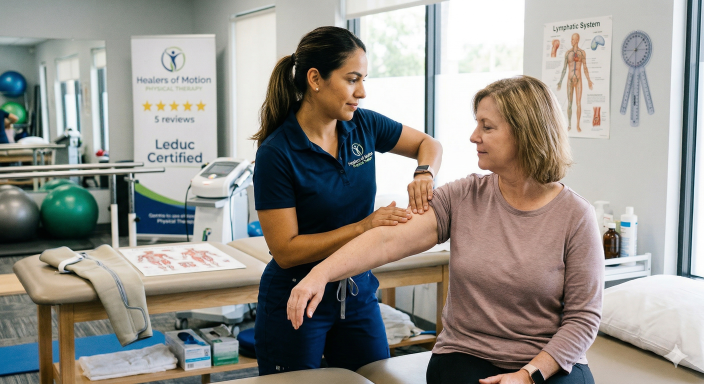
Specialized physical therapy may address shoulder mobility, tissue restriction, cording, and lymphatic concerns following breast cancer treatment.
Shoulder Mobility After Breast Cancer Surgery
Shoulder stiffness is common after breast surgery, particularly when healing, pain, protective posture, lymph-node procedures, or radiation cause a patient to limit arm movement. Over time, this can make everyday activities such as reaching into a cabinet, putting on clothing, washing hair, driving, sleeping comfortably, or returning to exercise more difficult.
Dr. Mora evaluates the shoulder, shoulder blade, chest wall, posture, scar mobility, and surrounding soft tissues to determine what is limiting movement. Treatment is progressed carefully, with the goal of restoring mobility without placing unnecessary stress on healing tissues.
Patients experiencing persistent shoulder symptoms may also benefit from our information about physical therapy for shoulder pain .
Axillary Web Syndrome and Cording
Axillary Web Syndrome, commonly called cording, can occur after breast surgery or lymph-node procedures. A patient may notice one or more tight, rope-like bands extending from the underarm into the upper arm, elbow, forearm, or chest.
Cording can restrict shoulder and arm movement and may create pulling, discomfort, or difficulty reaching overhead. Treatment may include gentle soft-tissue techniques, guided mobility, stretching, and home exercises selected according to the patient’s stage of healing and response to care.
Signs That May Benefit From an Evaluation
- Tightness or pulling through the underarm, chest, or arm
- Difficulty lifting the arm overhead
- Shoulder stiffness after mastectomy or lumpectomy
- Visible or palpable cords beneath the skin
- Breast, chest, trunk, hand, or arm swelling
- Scar sensitivity or restricted tissue movement
- Weakness or difficulty returning to normal activities
Symptoms should be evaluated individually so that treatment can be coordinated with the patient’s medical care and stage of recovery.
Scar Tissue and Chest-Wall Mobility
Surgical scars and radiation-related tissue changes can affect how the skin, fascia, chest wall, and shoulder move together. Some patients describe tightness, pulling, sensitivity, restricted breathing movement, or difficulty fully extending the arm.
Specialized soft-tissue and scar-mobility techniques may be used when appropriate to improve movement around the surgical area. Treatment is always adapted to tissue healing, sensitivity, medical history, and physician recommendations.
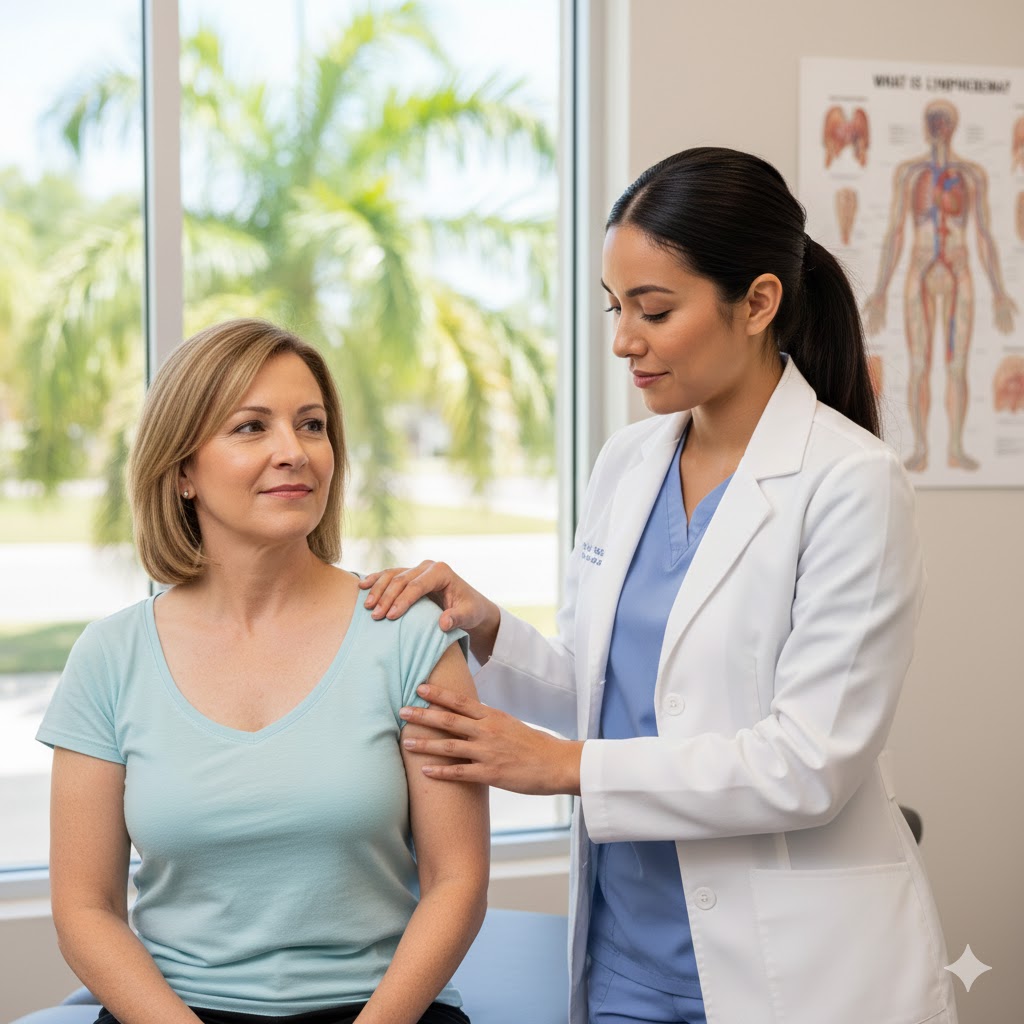
Personalized upper-body rehabilitation helps restore shoulder mobility, reduce pain, and support recovery after breast cancer surgery.
Lymphedema Management After Breast Cancer Treatment
Breast surgery, lymph-node removal, and radiation can affect the body’s ability to move lymphatic fluid efficiently. Some patients develop noticeable swelling, while others experience subtle heaviness, tightness, fullness, aching, or changes in how clothing and jewelry fit.
As a clinician with advanced training in lymphatic care, Dr. Mora evaluates symptoms affecting the arm, hand, breast, chest, or trunk. Treatment may include education, gentle exercise, movement strategies, compression guidance when appropriate, and manual lymphatic drainage .
Patients with ongoing or established swelling can learn more about our comprehensive lymphedema therapy in Pembroke Pines .
Benefits of Breast Cancer Rehabilitation
- Improved shoulder and arm mobility — Restore movement needed for reaching, dressing, grooming, driving, work, and exercise.
- Reduced chest-wall and scar restriction — Improve the mobility of tissues affected by surgery and radiation.
- Management of cording — Address tight, restrictive bands that may limit arm and shoulder movement.
- Lymphedema support — Identify swelling and provide individualized strategies for lymphatic health and symptom management.
- Improved strength and confidence — Rebuild physical capacity gradually following treatment and periods of reduced activity.
- Personalized recovery guidance — Receive one-on-one education and treatment based on your procedure and goals.
A Clinical Continuum of Care
Recovery from breast cancer is not a single event. Physical needs can change throughout surgery, chemotherapy, radiation, reconstruction, and long-term survivorship. Dr. Mora’s background in hospital-based rehabilitation helps her understand the complexities of post-surgical healing, radiation-related fibrosis, fatigue, weakness, and lymphatic dysfunction.
When needed, rehabilitation can be coordinated with the patient’s surgeon, oncologist, or other members of the medical team. The goal is to provide appropriately timed physical therapy that supports medical care rather than treating recovery as a separate process.
Evaluate
Assess shoulder motion, tissue mobility, swelling, strength, posture, symptoms, and functional limitations.
Treat
Apply individualized hands-on care, mobility work, lymphatic strategies, education, and therapeutic exercise.
Progress
Gradually restore strength, confidence, daily activity, work demands, recreation, and long-term independence.
Rehabilitation for Other Cancer Types
Although this page emphasizes post-mastectomy and breast cancer rehabilitation, oncology physical therapy may also assist patients recovering from other cancer treatments. Surgery, chemotherapy, radiation, hospitalization, and prolonged inactivity can contribute to weakness, pain, reduced endurance, balance concerns, stiffness, and difficulty returning to everyday tasks.
Treatment is based on the individual’s diagnosis, treatment history, medical guidance, functional limitations, and recovery goals. Patients recovering from cancer-related surgery may also benefit from our physical therapy for surgical recovery .
Why Choose Healers of Motion?
Specialized Care Built Around the Individual
- One-on-one care with Dr. Evelyn Mora: Treatment is never handed off to a rotating group of providers.
- Advanced lymphatic expertise: Care includes specialized attention to swelling, lymphatic dysfunction, and upper-extremity concerns.
- Personalized treatment plans: Rehabilitation is tailored to the patient’s surgery, symptoms, medical history, and goals.
- Hands-on clinical approach: Treatment may combine manual therapy, mobility work, exercise, education, and lymphatic strategies.
- Compassionate environment: Patients receive private, attentive care that respects the physical and emotional demands of cancer recovery.
Learn more about Dr. Evelyn Mora and Healers of Motion Physical Therapy .
Preparing for Your First Visit
During your first appointment, Dr. Mora will review your medical and surgical history, current symptoms, functional limitations, and personal recovery goals. She will evaluate the areas affected by treatment and explain an appropriate plan of care.
Patients can review and complete available patient forms before their appointment. Please bring any relevant medical instructions, precautions, compression garments, or physician recommendations that may help guide treatment.
Questions before scheduling?
Contact Healers of Motion to discuss your concerns and determine the next step for an individualized evaluation.
Contact Healers of Motion